
Inspiration
Welcome to our Creative Learning Blog, We believe that creative learning is a powerful tool for unlocking the potential of learning in SEND provision. We explore a range of topics, from sensory-friendly learning environments to innovative teaching strategies that are tailored to the strengths and needs of students including neurodiverse learners. Our blog is written by Nathanael, the founder of Bright Circle Learning, who has been writing about inclusive creative learning for several years.
Throughout our blog, we delve into the latest research and best practices for SEN education, offering insights and advice for teachers, parents, and learners alike. Nathanael’s views have evolved over time, but we’ve kept some of his older posts to show the journey of learning and growth that he’s undergone. We use identity-first language, recognizing that neurodiversity is an inherent part of an individual’s identity and should be celebrated and accommodated, rather than seen as a deficit.
We’re passionate about creating a world where every learner, regardless of their abilities or challenges, has access to a high-quality education that builds positive futures. Join us as we explore the latest trends, share practical tips, and showcase success stories from the world of SEN education.
-

Photo by Pixabay on Pexels.com How can we deliver PSHE through a spiral curriculum? Personal, Social, and Health Education (PSHE) is an essential part of a student’s education. It’s designed to help young people develop the knowledge, skills, and values they need to lead healthy, happy, and fulfilled lives. PSHE covers a broad range of topics, including emotional wellbeing, relationships and sex education, drug and alcohol awareness, mental health, financial education, and many more. In this post, we will explore the benefits of a spiral curriculum in PSHE for a SEND setting as well as reference the PSHE Association, a leading organization in the field of PSHE education.
So what is a spiral curriculum? A spiral curriculum is a teaching approach that involves revisiting topics and concepts at regular intervals to deepen understanding and build upon prior knowledge. In PSHE, a spiral curriculum is particularly effective because many of the topics covered are complex and multi-layered, and students need to understand them in a meaningful way to apply them to their lives. By revisiting topics throughout their school career, students have the opportunity to develop a deeper understanding of the issues and reflect on their experiences as they progress through different stages of development. For example, a student might learn about healthy relationships in Year 6, and then revisit the topic in Year 9, building upon their prior knowledge and reflecting on their experiences with more maturity. I spoke a bit about creating a coherent and well sequenced curriculum in my last post.
The benefits of a spiral curriculum in PSHE are numerous. Firstly, it ensures that students receive regular and consistent education on key topics. In PSHE, some topics are only taught once, which may not be sufficient for students to fully understand and apply them. By revisiting topics, students can deepen their understanding and consolidate their learning, which can lead to more positive outcomes in the long term.
Secondly, a spiral curriculum in PSHE is inclusive and caters to the diverse needs, strengths and experiences of students. Every student has different needs. strengths, experiences, and backgrounds, and a spiral curriculum allows teachers to cater to those needs more effectively. For example, a student who has experienced trauma might find it difficult to understand healthy relationships initially, but revisiting the topic over time allows them to process their experiences and develop a deeper understanding in a safe and supportive environment.
The PSHE Association supports the delivery of effective PSHE education in schools. The association provides training, resources, and guidance to teachers, schools, and local authorities, to help them deliver high-quality PSHE education that meets the needs of students. The PSHE Association has developed a comprehensive framework for PSHE education, which outlines the key areas of learning and provides guidance on how to deliver effective teaching across all key stages. In particular for SEND, they have developed a comprehensive SEND framework to support PSHE education leads and Special Educational Needs Coordinators (SENCOs). Their framework sets out learning outcomes for students in SEND settings, based on the Programme of Study for PSHE education from the national curriculum. The framework is designed to help teachers plan and assess developmentally-appropriate PSHE education. The framework is also fully aligned with the Statutory Guidance for Relationships Education, Relationships and Sex Education and Health Education (RSHE).
Their framework also supports both mainstream and special education schools to provide a comprehensive PSHE programme that integrates, but is not limited to, the statutory content. For example, ‘The World I Live In’ section covers aspects of PSHE relating to careers, economic wellbeing, personal safety and how to prepare for adulthood. (PSHE Association, 2023)
What’s the catch? There isn’t one, you can download and use the framework in your school or setting for free. That’s why, whilst we are not endorsed by the PSHE association, we are developing curriculum resources that align with the learning intentions identified in the PSHE associations’ SEND framework. PSHE education is essential for the development of young people, and a spiral curriculum is an effective approach to ensure that students receive regular and consistent education on key topics. The PSHE Association is a valuable resource for schools and teachers, and their framework provides a robust guide to delivering effective PSHE education. By ensuring high-quality PSHE education, we can help young people lead healthy, happy, and fulfilled lives.
Want to be kept up to date with what inspires us? Subscribe below:
-
When I first learnt to teach the emphasis was on delivering a great lesson, however a great lesson taught in silo can fail to develop a student. To truly develop a student, we need a good understanding of where we want to go, where they are now and the steps to get there. It all starts with a well sequenced and coherent curriculum. Creating a well-sequenced curriculum is essential for ensuring that students can develop a deep understanding of the subject matter. A well-sequenced curriculum provides students with a clear pathway through the material, enabling them to build on prior knowledge and understand the connections between different concepts. In this post, we will discuss some of the key elements that can support us to effectively create a well-sequenced curriculum.

Photo by Adil on Pexels.com Identify the Key Concepts: The first step in creating a well-sequenced curriculum is to identify the key concepts that students need to understand in depth in order to thrive in life. Working towards understanding key concepts in greater depth will help you to establish a clear learning progression and ensure that students are building on their prior knowledge. A powerful method to achieving this is to explore the big ideas of your curriculum and identify the strands or collections of knowledge, skills and values you want your students to gain throughout their journey with you. The best place to start is often the end, focusing on the meaningful outcomes that will build positive futures for your students. What are the meaningful outcomes? What do your students need to live the life they want? Obtain a job they want? Contribute to society in a way that is meaningful and beneficial to them?
There’s an exciting debate on what the big themes of education are. Mary Myatt is one key figure exploring the big themes within specific subjects with school leaders and teachers. She writes and shares ideas at Myatt and Co and her book ‘The Curriculum: Gallimaufry to Coherence’ is a core read for anyone wanting to understand curriculum development. I’ll leave you with a much more concise point made by Mary who suggests there is strength in doing “fewer things at greater depth” providing they are the right things of course; I would suggest discussing with your school community what you feel these are together.

Photo by cottonbro studio on Pexels.com Determine the Order of Instruction: Once you have identified the key concepts, you need to determine the order of instruction. This involves sequencing the concepts in a logical and progressive manner, so that students can build on their understanding as they progress through the material. What does this mean? It means thinking about a student’s journey in your setting and the steps required to gain skills and knowledge towards an outcome at each developmental stage. Let’s take a PE lesson where students are developing the skill to skip, we don’t instantly gain the knowledge to skip, for many students there are a few steps that take place first: running, hopping, balancing, standing, sitting up, being able to turn their body, these are all developmental steps towards a seemingly simple goal. When a school and it’s teachers have a strong understanding of development they can take the learning to a new level, ensuring students have the prior knowledge to achieve. There is a huge benefit in exploring the development of key concepts with your community and involving your students and teachers so that misconceptions and ideas can be discovered together. In a SEND setting the positive impact of a secure understanding of development can often be greater as an informed teacher who understands the different starting points of their students can enable activities where they can all achieve and work towards their next step.
Thankfully a lot of people have done some legwork for you and developed progression maps in most subject areas to break down the development of knowledge and skills. However not all are perfect or the best fit for each setting. One example of an effective sequenced, well-ordered and mostly free curriculum is White Rose Maths, a group of teachers and mathematicians, dedicated to developing maths education for everyone. At White Rose they break down the developmental steps of learning mathematics, exploring the development of knowledge and skills within each key strand.
So, you have a good understanding of the order of instruction, how do you make sure it translates to your students? Let’s look at one more example and focus on the language of algebra, the national curriculum doesn’t introduce the language of algebra until upper key stage 2. So where does the prior knowledge come from? Algebra starts fundamentally with the understanding of missing number, so what opportunities can be developed to support students learning in missing number and are these being provided before the developmental level of upper key stage 2. The concept of solving missing number problems, for example setting up for a party and solving the problem of a few missing plates, could be introduced before students are at the developmental stage for the language of algebra. This way students will arrive equipped with prior knowledge and skills required to understand the concept in greater depth. Also offering students the important opportunity to gain the knowledge and skills towards algebraic understanding in real life and meaningful depth, which leads us on to our third key element.

Photo by Jak Jones on Pexels.com Consider the Developmental Level: When considering the developmental level of each concept in your curriculum, it’s important to remember that students need a strong foundation of knowledge to build upon. Starting with the early concepts will allow students to become familiar with the basic concepts and develop their confidence before moving on to more complex ideas. Sequencing your curriculum in this way will also allow students to develop a deeper understanding of the subject matter. When students have a solid understanding of the basics, they are better equipped to tackle more complex concepts.
An approach to teaching that supports in depth learning of key concepts is known as teaching for mastery. Teaching for mastery involves breaking down complex concepts into smaller, more manageable parts, allowing students to master each part before moving on to the next. This approach encourages students to develop a deep understanding of the subject matter, rather than just memorizing facts. The National Centre for Excellence in the Teaching of Mathematics (NCETM) has a guide of teaching for mastery.
Teaching for mastery also emphasizes the importance of formative assessment, which allows teachers to monitor student progress and adjust instruction accordingly. By regularly assessing student understanding, teachers can identify areas where students may have misconceptions and provide additional support as needed. In addition, teaching for mastery encourages a growth mindset, which emphasizes the idea that intelligence and ability can be developed through hard work and dedication.

Photo by RODNAE Productions on Pexels.com Make Connections: When students make connections between different concepts, it helps them to develop a deeper understanding of the subject matter. A well-sequenced curriculum can facilitate this by providing opportunities to link concepts together and help students see how they are related. Additional activities can also support students to make connections, including through whole school events, extracurricular activities, and learning in the wider community. Whole school events, such as celebration days can provide opportunities for students to explore different aspects of a subject and see how they are interconnected. For example, planning and delivering a whole school celebration meal might support the application of mathematics and DT knowledge and skills allowing students to see how these different disciplines are related. Extracurricular activities can also be used to support student learning and help them make connections between different concepts. For example, a robotics club might provide opportunities for students to apply their knowledge of physics and programming, while a dungeons and dragons club might help students develop critical thinking skills and see how different political and social issues are interconnected. It’s important to take time to think about the connections and links that you want to support your pupils to discover and check that the activities you plan are supporting them to find these connections.
Events in the community can also be used to support student learning and help them make connections between different concepts. For example, a school might organize a community service project that allows students to apply their knowledge of science and social studies to real-world problems. In addition, teaching politics and advocacy in lessons can be complemented by a school council that enables students to have impact and make decisions about their school. This approach can teach democracy in greater depth by giving students a voice in the decisions that affect their education. By participating in the school council, students can learn about the democratic process and develop the skills needed to advocate for their ideas and beliefs. It’s important to consider who is on your school council and support students to advocate by considering their differences, Talking Mats are a good example of an inspiring approach on using visuals to support advocacy.

Photo by fauxels on Pexels.com Review, Revise and Listen: The world is constantly changing, and this means that education must also change in order to remain relevant and effective. A curriculum that was effective a decade ago may no longer be appropriate for today’s students. Therefore, it is important to regularly review and revise the curriculum to ensure that it remains up-to-date and meets the needs of current students. Students need to be equipped with the knowledge and skills that will enable them to succeed in the future. For example, the rise of artificial intelligence and automation means that many jobs that exist today may not exist in the future. Another reason why it is important to review and revise the curriculum is that students themselves are constantly changing. As they grow and develop, their needs, interests and aspirations may change. Therefore, the curriculum needs to be flexible enough to adapt to these changes and provide students with the support they need to reach their full potential.
Ultimately, true education is about developing individuals towards the best outcomes for them, it’s not a one size fits all approach. This means focusing on building positive futures for students and equipping them with outcomes that support meaningful and bright destinations. By regularly reviewing and revising the curriculum, educators can ensure that they are providing students with the best possible education, one that meets their current strengths and needs whilst preparing them for the future. By soliciting feedback from students, colleagues and parents, educators can gain valuable insights into what is working well and what needs to be improved, and make changes as necessary to ensure that the curriculum remains effective and relevant.
Creating a well-sequenced curriculum is a critical component of effective teaching. By identifying key concepts, sequencing them in a logical order, considering difficulty level, making connections and regularly reviewing and revising, you can create a curriculum that helps students develop a deep understanding of the subject matter. These five points go some way in supporting you to develop a coherent and sequence curriculum. Although be prepared to constantly explore where you are before evolving your curriculum. The Education Endowment Foundation provides a good overview of the foundations for good implementation. Evolution rather than revolution has the potential to stick better, so take some time. Take time to listen, listen to people’s stories, listen to their ideas and take them on the journey with you. Ultimately a powerful curriculum is developed with people.
-
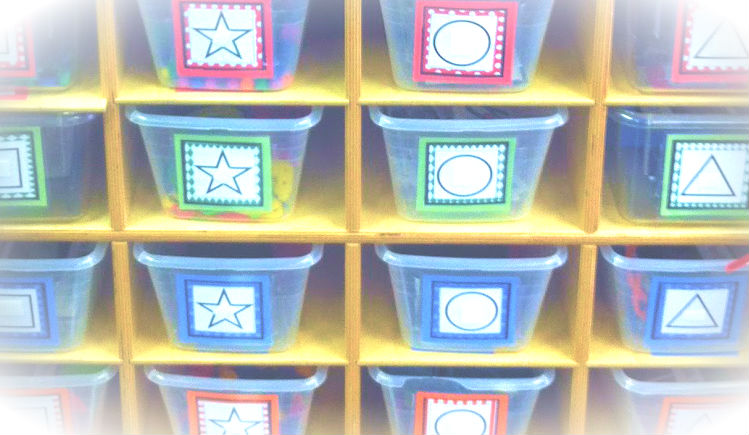
No I haven’t spelt it wrong, I wanted to share a little bit about the Intensive 3-Day TEACCH Training Course I attended earlier this year. Below i’ve pointed out the basic principles of TEACCH Training and highlighted the definition “The Culture of Autism”. You can get more in-depth information from TEACCH. I haven’t gone into great detail on the three days spent in a room with Professor Gary Mesibov (former Director of Div. TEACCH) but instead how it has inspired me to stick to there principle in my classroom. It’s safe to say that Mesibov knows his stuff and definitely fulfilled his role as the more knowledgeable other.
The Principles of Structured TEACCHing:
- Understand the culture of autism (see below)
- Developing an individual person and family centred plan for each client or student
- Structuring the physical environment
- Using visual support to make the sequence of daily activities predictable and understandable
- using visual supports to make individual tasks understandable
“The Culture of Autism” (As defined by TEACCH)
- Relative strength in and preference for processing visual information
- Frequent attention to detail
- Difficulty combining ideas
- Difficulty with organising ideas, materials and activities
- Difficulties with attention
- Difficulties with concepts of time
- Communication Problems
- Tendency to become attached to routines
- Very strong interests and impulses in engaging in favoured activities
- Marked sensory preferences and dislikes
Nothing too unfamiliar to any good teaching practice but it’s the research that supports the TEACCH approach that gives it solid ground for practice. Mesibov provides evidence of TEACCH supporting successful transition to adulthood, most inspiring were the videos of adults and young people with autism reaching their high expectations and aspirations. I’ll certainly be checking that my teaching practice includes the fundamental principles of TEACCH. Structure doesn’t mean cutting down on creative and imaginative lessons, it just results in a bit more work to ensure they fit to the structured teaching principles.
A short video by Camden Council with a pupil explaining The Teach Approach:
-
Following recent training with Actor Kelly Hunter, I thought i’d share a short video about her methodology that uses Shakespeare to release the communicative blocks within children with autism.
Two major themes underpin her work: The iambic pentameter, which creates the sound of a heart beat and the exploration of the minds eye.
Find out more on Kelly’s website or watch below:
-
Symbols help to communicate ideas and information. (widget.com, 2015)
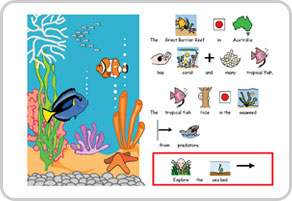 We can use symbols to aid understanding and communication for people who find reading text difficult. They are a visual support for the printed word and give easier access to information by separating it from the challenge of reading. Communicate in Print (CIP) is a fantastic resource from the software company Widget, the resource enables text to be directly linked to symbols in a wordbank and provides templates for a range of accessible resources. Symbols are being used in an ever-growing number of contexts, I have experienced using symbols whilst teaching pupils with special educational needs, but more increasingly I have witnessed the benefit of symbols in environments where pupils are learning english as an additional language. You can find out more about visual aids and their benefit for engaging pupils learning EAL in my research project.
Communication in Print is a fantastic resource but for many professionals the initial period of using new software can be incredibly daunting. Initial guidance over the software’s many features is always useful, i’ve often led training with individuals and groups on new software, including Communication in Print. That’s why I was delighted to discover that Widget are still providing free online training in the basics of using CIP. You can visit widget.com/training to register for the next 45 minute online training session.
-
An inspiring short clip from the Channel 4 Documentary ‘Educating Yorkshire’.
The series follows teachers and pupils at Thornhill Community Academy, a secondary school in Dewsbury. The video focuses on ‘Mushy’ who upon arrival at school could barely talk and his journey with Mr Burton to find his voice.
-
Everything in the universe has rhythm. Everything dances. – Maya Angelou
I appear to have dance on the mind today so I’ve decided to share yet another group of inspiring artists with you. Previously I explored the work by Physical Theatre Group DV8 and their piece The Cost of Living. Today, I decided to share the work of Candoco Dance Company, who are a contemporary dance company of disabled and non-disabled dancers. They have a number of excellent teaching resources that reinforce visits to recent shows and are currently touring with their production The Show Must Go On. Their work is incredibly inspiring to watch and the contemporary choreography really pushes the art form to it’s limits.
You can see an example of their work here:
-
Several years ago my role in a school for pupils with special educational needs included the responsibility of ensuring all pupils had appropriate access to IT.
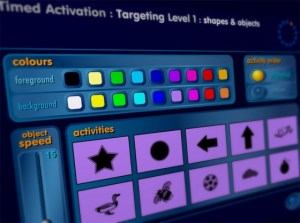 As part of this specialist role I supported pupils with profound and multiple learning difficulties and their support assistants or teachers. I implemented a bespoke learning plan that addressed each child’s specific needs and would develop their early ICT skills. During this process I made use of a huge variety of software and hardware. In particular utilising a simple, accessible and free resource that was provide by the Northern Grid for Learning.
The excellent resource SEN Switcher is a suite of programs designed to develop early ICT skills for pupils with PMLD, pupils who need to develop skills with assistive devices and young children new to computers. You can download the software or access it online and it come reinforced with a comprehensive set of teachers notes. The teaching notes guide you through the ICT development path and include a number of case studies to reinforce the method of progression. Assessment guides give direct links to P Levels and a comprehensive standardised assessment method is provided too. SEN Switcher has always proven to have a deep impact on the pupils I have introduced it to and has engaged and motivated many of them.
There are a wealth of other brilliant accessible software programs and resources available from inclusive technology, which I hope to talk about soon.
-
Looking back on a brilliant multi-sensory resource today by Christopher Davies, Artistic Director at Bamboozle Theatre.
The book titled ‘Creating Multi-sensory Environments‘ provides a wealth of practical ideas for teaching and learning. Including ideas for easy to assemble multi-sensory environments that are stimulating and meaningful. It is an incredibly valuable resource for working with children with sensory impairments and pupils with profound and multiple learning disabilities (PMLD).
With a practical focus on building creative multi-sensory environments, Davies provides a step by step guide to each activity which also link to clear learning outcomes and P-scales for pupils with SEN. Encouraging creative thinking and learning, the book includes suggestions for differentiation and extension along with a wealth of imagination.
Christopher Davies artistic director of bamboozle takes us through chapter 14 of the book to make a sensory sea cave in this creative video.
-
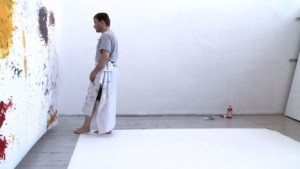 One of the best things about living a short commute from Central London is being able to access a vast number of theatres, museums and art galleries. Recently I visited the ‘energy and process’ displays at the Tate modern, I tend to aim for a couple of pieces that interest me and avoid looking at too much. I’ve always found that by limiting what I take in i’m able to explore the work in more detail. You can visit a number of gallery websites including the Tate for an overview of exhibitions.
One of the pieces that I chose was Żmijewski’s video Blindly which examined what it means to imagine and represent without relying on the sense of sight. The video showed documented scenes from a painting workshop with visually impaired participants. Artur Żmijewski, a Polish artist and filmmaker, has explored a number of political issues including the memory of concentration camps. Many of his works directly address the challenges faced by people living with disabilities.
In this series of individual painting workshops. The participants were asked to paint a self-portrait, a landscape, and an animal on large sheets of paper. Some were born blind, some lost their sight after an accident or condition, and all responded to the assignments in highly personal ways. Żmijewski rarely intervened, leaving the participants free to express their own perceptions of the world. The highly tactile process is depicted as messy but purposeful, yet viewers are aware they are able to see these striking pictures while their creators cannot.
Żmijewski and his participants came across very honestly, it was particularly engaging to witness how the painting sessions enabled free flowing conversation between artist and participant. Blindly is showing at the Tate Modern until October 2015, you can find out more on tate.org.uk.

 Bright Circle Learning
You must be logged in to post a comment.